

If you’re comparing two companies in the same sector, equity can offer extra context. This retained earnings is especially the case in capital-heavy industries like mining , manufacturing or banking , where assets and liabilities play a big role. When shareholder equity is positive, it can be a sign the company is in decent shape.

What is Shareholders Equity?
Nareit serves as the worldwide representative voice for REITs and real estate companies with an interest in U.S. real estate. In total, REITs of all types collectively own more than $4.5 trillion in gross assets across the U.S., with public REITs owning approximately $2.5 trillion in assets. U.S. listed REITs have an equity market capitalization of more than $1.4 trillion. Accounts Payables, or AP, is the amount a company owes suppliers for items or services purchased on credit. As the company pays off its AP, it decreases by an equal amount in the cash account.
Stock Issued for Other Than Cash
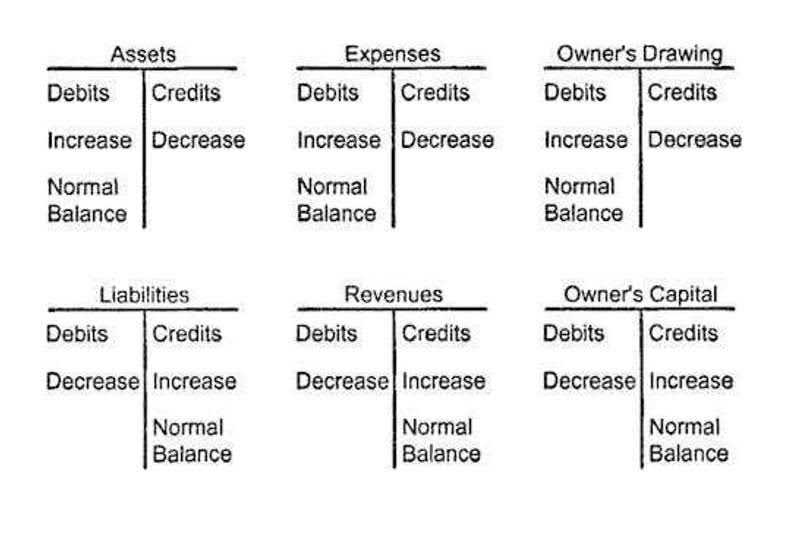
A positive result is referred to as a statement of stockholders equity profit, while a negative result is referred to as a deficit. Preferred stock where the dividend could be more than the original, stated dividend. If the net realizable value of the inventory is less than the actual cost of the inventory, it is often necessary to reduce the inventory amount. Book value of equity (BVE) and Market value of equity (MVE) are two important metrics used to assess a company’s value, but they approach this valuation from different perspectives.

Shareholders’ Equity = Share capital + retained earnings – treasury stock
Research shows that over extended periods of time, REITs have outperformed other forms of real estate investments. For example, CEM Benchmarking’s 2024 study shows that between 1998 and 2022, REITs posted average returns of 9.7% compared with 7.7% for private real estate. At the end of the period, you can calculate your final Retained Earnings balance https://www.innovative-bd.com/2022/09/19/not-for-profit-accountants-orange-county/ for the balance sheet by taking the beginning period, adding any net income or net loss, and subtracting any dividends. Understanding these factors is crucial for investors, analysts, and stakeholders alike as they help evaluate the accuracy and reliability of shareholder equity figures reported by companies.
- As you can see there is a heavy focus on financial modeling, finance, Excel, business valuation, budgeting/forecasting, PowerPoint presentations, accounting and business strategy.
- Investors may also purchase shares in a REIT mutual fund or exchange-traded fund (ETF).
- The officers include the president, chief executive officer (CEO), chief operating officer (COO), chief financial officer (CFO), vice presidents, treasurer, secretary, and controller.
- Net worth refers to the total value of a company’s assets minus its debts.2) Does negative shareholder equity indicate bankruptcy?
- Every corporation has common stock and those owners are known as common stockholders.
Common Stock and APIC Calculation Example
It means that the company’s debt to equity ratio is skewed in an unconducive manner, a scenario that is not favourable. Should the shareholders’ equity continue to remain negative for consecutive years, the company faces a danger of liquidation. The items that would be included in this line involve the income or loss involving foreign currency transactions, hedges, and pension liabilities. (Some corporations have preferred stock in addition to their common stock.) Shares of common stock provide evidence of ownership in a corporation.
- Learn the most important formulas, functions, and shortcuts to become confident in your financial analysis.
- Negative shareholders’ equity arises when total assets are less than total liabilities.
- Included in the indenture would be the call price, the actions that can occur if the company fails to pay the interest or dividend, etc.
- Stockholders’ equity is also the corporation’s total book value (which is different from the corporation’s worth or market value).
- Understanding Shareholder Equity (SE) is crucial as it represents a company’s net worth or the total value of its residual interest in assets after all debts are paid off.
- This account is then closed to the owner’s capital account or a corporation’s retained earnings account.
Book Value vs. Shareholder EquityBook value (BV) represents the net worth of a company as stated on its balance sheet, calculated by subtracting intangible assets from total assets. It provides insight into the value of a company’s assets if they were liquidated and sold for their carrying amounts instead of their market values. Shareholder equity, as previously mentioned, is the difference between a company’s total assets and liabilities. A negative shareholders’ equity means that shareholders will have nothing left when assets are liquidated and used to pay all debts owed. On the other hand, positive shareholder equity shows that the company’s assets have grown to exceed the total liabilities, meaning that the company has enough assets to meet any liabilities that may arise. Shareholders’ equity refers to the owners’ claim on the assets of a company after debts have been settled.
Outstanding shares
- Outstanding shares, thus, represent the par value of common stocks issued alongside the par value of preferred shares that the company sells.
- If a company bought a property 20 years ago, the balance sheet won’t show its current market value.
- It includes stocks that have been issued to company officers, public investors, company insiders and the like.
- If the market value exceeds the book value, the stock may be considered overvalued since the market is paying more than the net asset value.
- A look at the shareholder equity reveals much about the company’s financial worth.
This account is then closed to the owner’s capital account or a corporation’s retained earnings account. This and other summary accounts can be thought of as a clearing account. If the net amount is a negative amount, it is referred to as a net loss.